Fantasy Picture Books
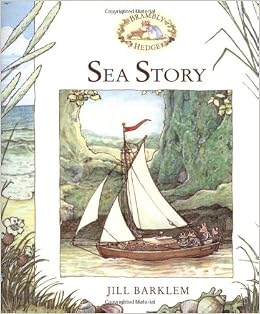
Barklem, J. (2000). Sea story. New York, NY: Atheneum Books for Young Readers.
Readers embark on a short yet lovely adventure in this picture book. In Brambly Hill, a variety of characters take journeys to protect or learn from their beloved home. A short yet inspirational series that holds a reflection for adventurers of all ages.
Gaiman, N., & McKean, D. (2005). The wolves in the walls. New York: HarperCollins.
In my introduction to the world of fantasy, I read about this book being a fantastical adventure depending on the reader's imagination. Through the abstract medium, the reader must decide what reality is in this Picture book in order to I understand the theme of generational identity.
Hamilton, V., & Moser, B. (1988). In the beginning: Creation stories from around the world. San Diego: Harcourt Brace Jovanovich.
This collection provides insight into the origin of fantasy from oral traditions, allowing the reader the ability to see the inspiration for much of modern fantasy. The tales as old as time laid the foundation for themes and frameworks that are still used it the genre of fantasy today.
Macaulay, D. (1990). Black and white. Boston: Houghton Mifflin Company.
At first glance, the four stories that are present in this picture book seem to have nothing to do with one another. After a couple of pages, the reader is forced to draw conclusions about how the stories are connected. The warning at the beginning of the novel about reading the book has a Lemony Snicket voice that compels the reader immediately.
Mayo, M. (1996). When the world was young: Creation and Pourquoi Tales. New York, NY: Simon and Schuster.
This anthology of tales takes a look at one of the lesser known aspects of fantasy, the porquoi genre. Enlightening, a bit humorous, animals eclectic, this collection also provides the reader insight into the origins of fantasy
Melmed, L. K., & LaMarche, J. (1992). The rainbabies. New York: Lothrop, Lee & Shepard Books.
At first glance, this picture book merely seems to tell a small magical tale, yet after further reflection, the detail leaves one thinking about the origin of mankind and the current structure of families.
Ransome, A., & Shulevitz, U. (1997). The fool of the world and the flying ship: A Russian tale. New York: Farrar, Straus and Giroux.
As I looked at books of fantasy, it was important for me to look to other cultures about some of their origin stories. This book did not disappoint and provided insight to the long told story from the Russian culture. This story teaches an evident lesson about the underdog and positions of power. A fun adventure and a valuable lesson!
Scieszka, J., Smith, L., & Leach, M. (2003). Squids will be squids: Fresh morals, beastly fables. New York: Puffin Books.
From the famous author of texts for boys, this book provides insight into the worlds of fables in a humorous yet poignant way. Those most unfamiliar with the lessons that can be drawn from a fable, will find this book to be an engaging introduction into not only fables, but also themes.
Shepard, A., & Souci, D. S. (1995). The gifts of Wali Dad: A tale of India and Pakistan. New York: AtheneumBooks for Young Readers.
Another picture book that provides insight into Asian cultural traditions, this story leaves readers realizing the importance of their words and their dreams. Paired along with squids will be squids, this text would allow readers to understand themes.
Steig, W. (2011). The amazing bone. New York, NY: Square Fish
With inspiring language and thoughtful illustrations, William Stieg, takes his readers on an adventure with a talking bone that leaves each one wondering what an unexpected friendhsip can bring.
Sís, P. (2000). Madlenka. New York: Frances Foster.
Madlenka is a character that provides a window for every child with an imagination. Set in an average city, Madlenka walks through her town only to discover that her town is in fact comprised of people from all over the world. In a simple way, she shows everyone her lose tooth, while reminding the readers of the riches the whole world has to offer.
Yolen, J., & Dyer, J. (2002). Child of faerie, child of earth. New York: Little, Brown
In a peculiar love story, one comes across an ancient tradition of what happens when a faeire grows and departs form the faerie ring. What happens when a boy of the faeire world meets a child of earth is simply brethtaking.
Yolen, J., & Guevara, S. (2000). Not one damsel in distress: World folktales for strong girls. San Diego: Harcourt.
I rented this collection form the library, but after completing it, I iimmediately placed it in my Amazon cart for my furutre daughters. A collection of tales form around the world shows the work of Yolen most magnificently. In an age of women’s strengths taking center stage, folktales of old provide refreshing insight into the long history of feminine strength and bravery worldwide.
Yolen, J., & Nolan, D. (1989). Dove Isabeau. San Diego: Harcourt Brace Jovanovich.
Yolan seems to draw on patterns and archetypes familiar to the world of fantasy as she introduces a princess cursed by a stepmother, who can only be saved by the help of her mother and her prince. A true happily ever after that leaves the reader shook by the power of a soft word.
Fantasy Novels
1-2
Bauer, M. D., & Sayles, E. (2011). The very little princess: Rose's story. New York: Random House.
I chose this book as it holds a familiar pattern of fantasy, small characters. With Borrowers feel, the chapter book shows what would happen in every young girl’s dreams, when her doll comes to life. Rose learns about the world of fantasy through her young doll friend.
3-5
Bois, W. P. (1975). The Twenty-One Balloons. New York, NY, U.S.A.: Viking
A classic fantasy tale is what this book has been called. I was anxious to read something that was from a different century and this peculiar book did not disappoint. The descriptive language and elevated diction called the reader to the depths of their imagination. An eccentric man, an explosion, and a completely functional world unknown to mankind provides the reader with an adventure to remember.
Alexander, L. (1965). The Black Cauldron, Book Two. New York: Henry Holt and Sons.
After Alexander first book, I realized that I needed to read another of his to become more familiar with high fantasy. Taran wields his first weapon as he aims to defeat Arawn and readers are placed in a world of suspended reality where they are able to see the sacrifices of Taran as windows into the sacrifices they might have to make one day.
Broach, E., & Murphy, K. (2008). Masterpiece. New York: Henry Holt
Animal fantasy is perhaps one of the most familiar subgenres, yet this book was unknown to me. In a relationship similar to the humans in Charlotte’s Web, Broach uses the skill of a beetle to bring a young boy to life. The fast-paced novel was a riveting read.
DuPrau, J., & DuPrau, J. (2013). The city of Ember. New York: Random House.
I had heard about this book when I was twelve. Yet in an effort to avoid fantasy I never picked it up. Captivated by the cover and the general story line, I knew this text was calling my name, After reading Beneath, I was excited for the idea of an underground world where humans are deprived of essentials without knowing their depravity. The novel praised the value of friendship, bravery, and discernment when it comes to obedience.
K., L. G., & Robbins, R. (2012). A wizard of Earthsea (#1). New York: Graphia
From the queen of fantasy, this novel was a must read. While I was grateful for the experience and I appreciated the depth of the text, I struggled to enter the world Le Guin created as it seemed beyond my imagination. I appreciated her decisiveness to have the characters battle with the darkness of their world and the potential to turn to darkness in themselves. Readers have to face the realities of good and evil through the eyes of the sorcerer Ged. I would highly recommend for fans of high fantasy.
Riordan, R. (2015). Magnus Chase and the gods of Asgard: The sword of summer. Los Angeles: Disney-Hyperion.
Hilarious, witty and modern. This fantasy tale piggy backs on the world of Olympia. With catchy chapter titles, a character that seems cut out of current avenger movies, and an adventure that suck the reader in, this novel was the most fun! While one might appreciate the close themes to Thor, some may find difficulty seeing Magnus replace the modern conception of Asgard. This novel allows for great teaching opportunities in the mythical world.
Stewart, T. L., & Sudyka, D. (2008). The Mysterious Benedict Society and the perilous journey. New York: Little, Brown.
Perhaps my favorite book of the novel, one I purchased and then purchased the entire series. This text introduces four of the oddest characters who have to band together to defeat a strange twin evil genius. With unexpected twists and turns, elevated vocabulary, and adventurous diction, the reader feels as if she too is on of the members of this child run society anxious to save the world and discover their strengths.
6-12
Adeyemi, T. (2018). Children of Blood and Bone The Ors̐ha Legacy. Henry Holt.
Fleischman, P., Frankfeldt, G., & Morrow, G. (2006). Dateline, Troy. Cambridge, MA: Candlewick.
Napoli, D. J. (2005). Bound. Atheneum.
Okorafor-Mbachu, N. (2011). Akata witch. New York: Viking.
Graphic Novel
Kibuishi, K. (2012). Explorer: The mystery boxes: Seven graphic stories. New York: Amulet Books.
Kibuishi, K. (2008). Amulet. Book One. The stonekeeper. New York: Graphix.